
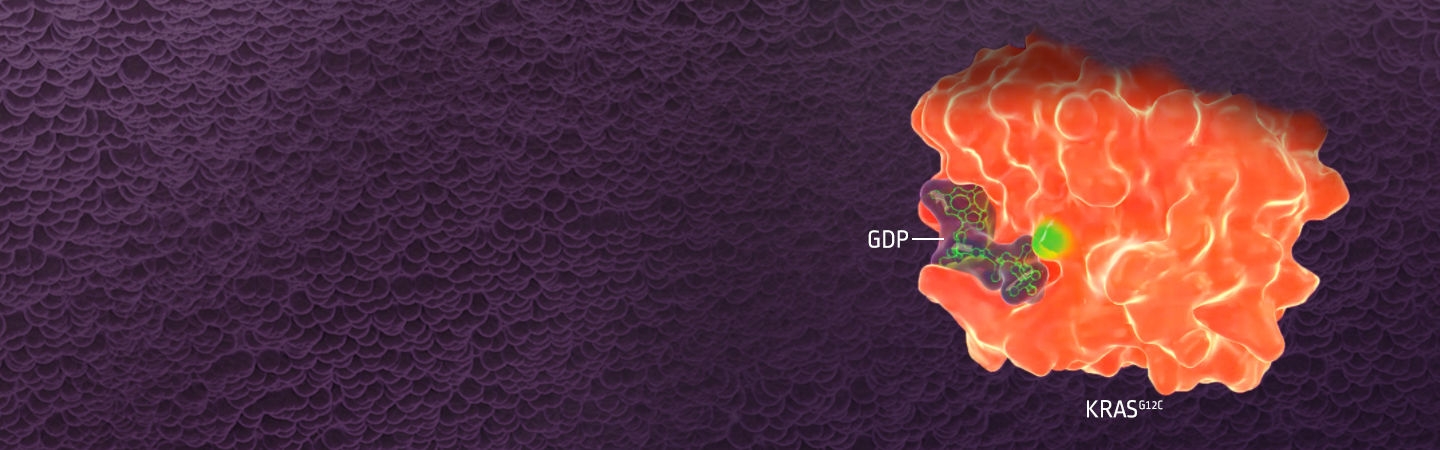
The KRAS G12C mutation drives cancer cell growth and survival1
KRASG12C is a glycine-to-cysteine amino acid substitution driven by a point mutation in the KRAS coding sequence2
KRASG12C is a glycine-to-cysteine amino acid substitution driven by a point mutation in the KRAS coding sequence2
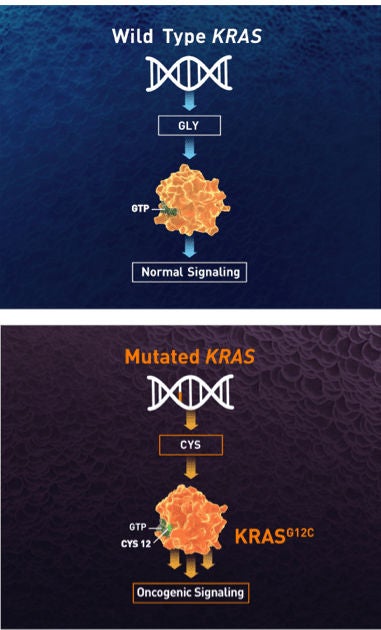
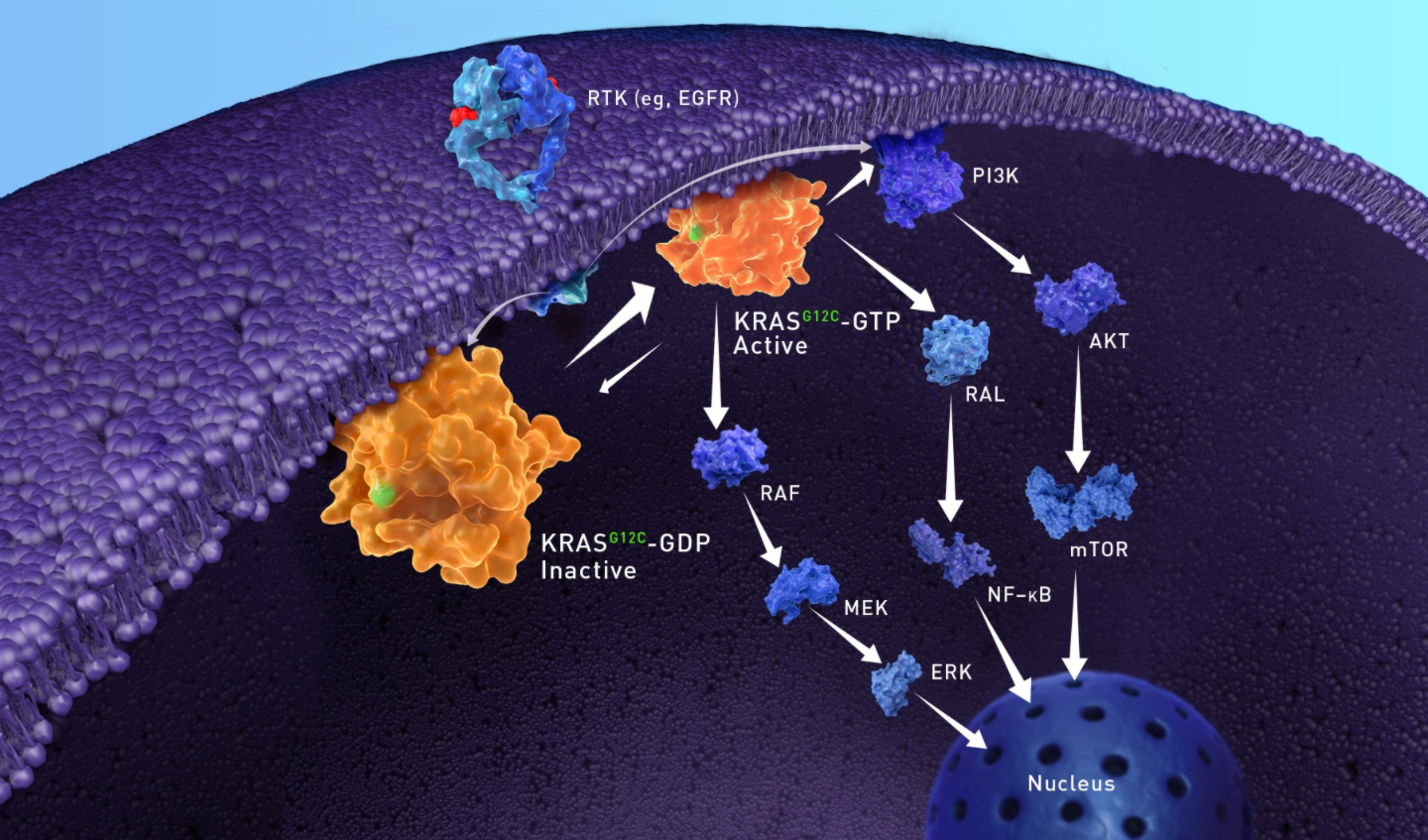
AKT, protein kinase B; CYS, cysteine; EGFR, epidermal growth factor receptor; ERK, extracellular signal-regulated kinase; GDP, guanosine diphosphate; GLY, glycine; GTP, guanosine triphosphate; KRAS, Kirsten rat sarcoma; MEK, mitogen-activated protein kinase; mTOR, mammalian target of rapamycin; NF-κB, nuclear factor kappa-light-chain-enhancer of activated B cells; NSCLC, non-small cell lung cancer; PI3K, phosphoinositide 3-kinase; RAF, rapidly accelerated fibrosarcoma; RAL, Ras-like; RTK, receptor tyrosine kinase.
References: 1. Ryan MB, et al. Nat Rev Clin Oncol. 2018;15:709-720. 2. Ihle NT, et al. J Natl Cancer Inst. 2012;104:228-239. 3. Neel NF, et al. Genes Cancer. 2011;2:275-287. 4. Ferrer I, et al. Lung Cancer. 2018;124:53-64.

© 2025 Amgen Inc. All rights reserved. 9/2025
This website is intended for US audiences only.